
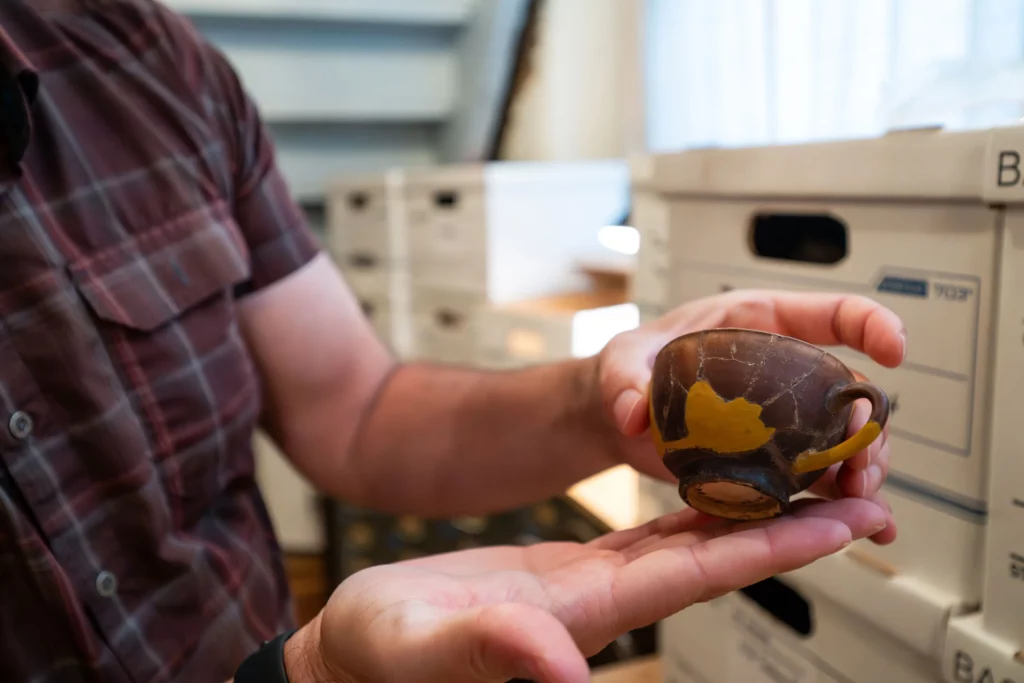
This summer, CHARG received exciting news: we received a Rediscovering our Revolutionary Traditions Grant from the National Endowment for the Humanities for a collections project developed in partnership with Historic Bethabara Park. The grant will allow us to begin the long process of conserving and recataloging archaeological collections that have been housed across multiple repositories under varying conditions.
The three-year, $750,000 grant will support staff, laboratory space, and student participation. We will hire two archaeological laboratory technicians and outfit a lab where the work can take place. We are still finalizing details about the facility and positions, but we hope to have the lab operational by the spring semester.
The project began last fall, when colleagues at Historic Bethabara Park approached Dr. Brock about collections stored in a building located within a floodplain. The facility lacked adequate environmental controls, and the collections had been exposed to mold. After visiting the building, we began developing a plan to relocate the objects to a safer facility. That immediate need led to a broader conversation about Bethabara’s archaeological collections, which are currently stored in three locations without a consistent cataloging system.
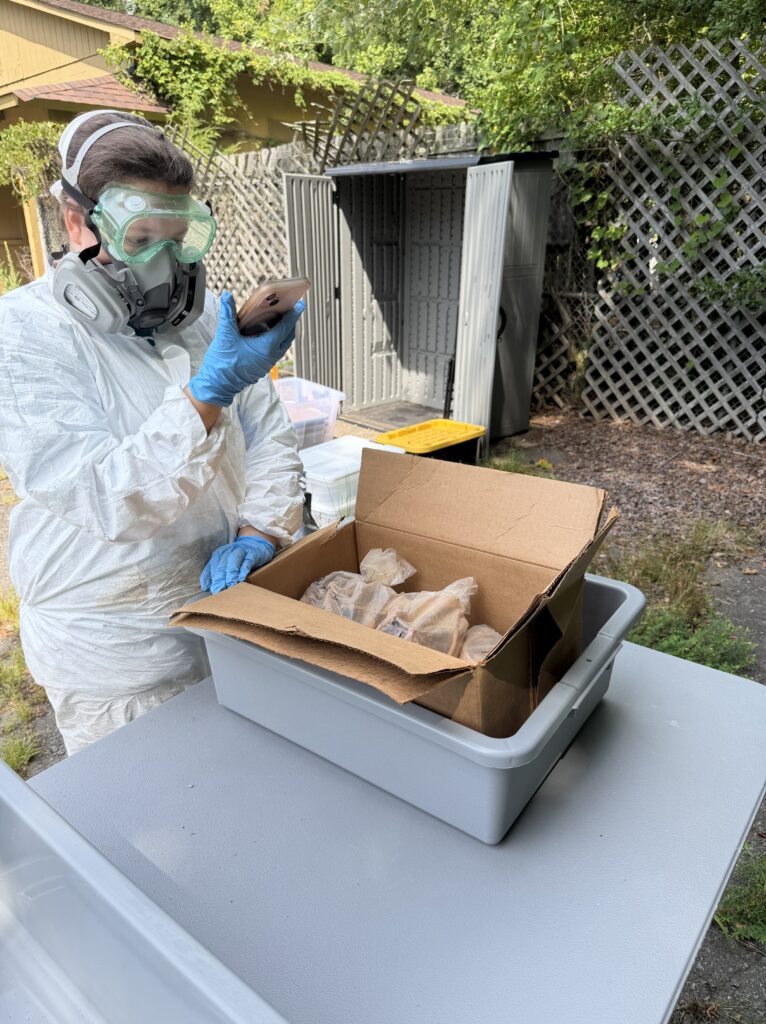
Wake Forest and Bethabara funded the initial relocation of the contaminated collection. CHARG then began developing a grant proposal focused on what would happen after the artifacts were moved. The resulting project includes designing a database for all three collections; cataloging or recataloging the artifacts; completing necessary conservation work; and rehousing collections in new bags and boxes where needed.
The scale of the project is immense. Three years may not be enough to complete every part of the work, but the grant will allow us to make substantial progress and to establish the necessary workflows and processes. As a result, the collections will be better cared for and increasingly accessible to scholars, museum staff, students, and the public.
Students will also have meaningful roles throughout the project. CHARG student researchers will work alongside the laboratory staff and help support volunteer programs and Lifelong Learning courses. In the process, they will gain hands-on experience in collections care, cataloging, public archaeology, and community-engaged research.
We are deeply grateful for the support of the National Endowment for the Humanities and excited to begin this work. The grant represents an important investment in our community partners, our students, and the long-term care of Winston-Salem’s archaeological heritage.
Community participation is also central to the project. We plan to offer Lifelong Learning courses several times each year, training volunteers in the laboratory methods used to catalog, bag, and box archaeological materials. Participants will then have opportunities to work alongside CHARG staff in the lab.
This project is rooted in Winston-Salem. It would not exist without Bethabara, and federal funding makes it a public investment. We want community members to be able to see the work, understand how the funding is being used, learn new skills, and participate in caring for these collections.
If you would like to follow the project, participate, or learn more about supporting the work, please join our email list.

